
The world feels more chaotic than ever. The ongoing macroeconomic shocks and geopolitical conflicts have made uncertainty the new normal. In times like these, governments must act decisively and with focus.
The Ontario government is not doing that.
The 2026 budget—much like previous budgets—fails to address the underfunding of health care, K-12 education, post-secondary education, community and social services, and rental and social housing—the core responsibilities of provincial governments.
Despite reports showing that Ontario lags behind most provinces in most of these areas, this year’s budget makes no attempt to close those gaps.

Health care
The health care sector is not getting the funding it needs to improve service levels. Funding will go up by a paltry 0.5 per cent this year then it will be cut by 1.6 per cent next year.
This funding drop doesn’t capture another disconcerting trend: more and more of public funding is going toward for-profit health care.
While the hospital sector is being downsized through inadequate funding, Ontario is expanding outsourcing contracts with for-profit surgical facilities. In December, the government announced four new private orthopedic surgery facilities as part of a $125 million scheme to increase for-profit involvement. This is the largest one-time injection of public dollars into for-profit health care in Ontario—and likely Canadian—history.
Chronic underfunding has also encouraged Ontario public hospitals to rely on costly for-profit staffing agencies to staff critical services. Ontario hospitals paid out over $9 billion to for-profit agencies over a decade. Between 2013-14 and 2022-23, real per capita private agency costs in Ontario nearly doubled (98 per cent) while spending on public hospital staff increased by only six per cent.
K-12 Education
In budget documents, education includes child care spending, which has grown considerably due to the federal $10-a-day child care program. If child care costs are excluded and nominal amounts are adjusted for inflation and population growth, the budget reflects a well-known reality: Ontario schools are strapped for cash. Funding has dropped 3.6 per cent this year.
Every year, the CCPA analyzes school board funding allocations, released later in the spring. Last year, we found that Ontario has underfunded schools by $6.3 billion since 2018.
One of the many consequences of budget shortfalls is larger class sizes, especially in grades one to four, where there are no caps on class size. In the 2024-25 school year, only 52 per cent of grade four to eight classes had fewer than 25 students, and four per cent—or 1,100 classes—had 30 students or more.
Post-secondary education
The budget disingenuously touts “new funding” for post-secondary education as a “historical investment.” That’s not accurate, for at least three reasons.
Funding is not keeping up with inflation and population growth. Even with said increase, this year’s funding has dropped in real terms by 1.9 per cent. Next year, it will drop by a whopping 10.6 per cent.
Much of the “new funding” will come from the egregious changes to OSAP—a classic case of taking from Peter to pay Paul.
Post-secondary spending as a share of Gross Domestic Product (GDP)—a measure of how much governments reinvest in education relative to the size of the province’s economy—remains below its 2018 level. To restore spending to its share of the economy in 2018, an additional $6.8 billion would be needed by 2029.

Community and social services
Funding for the ministry responsible for many vital services—Children, Community and Social Services—has also dropped by 2.4 per cent.
The current Ontario government has an appalling record of caring for vulnerable populations. Ontario Works (OW) rates have been frozen since 2018. The current rate of assistance for a single person receiving OW is half of the amount necessary to live in deep poverty. It’s cruel.
The 2026 budget doesn’t do anything to remediate this situation, nor the growing number of children, seniors, and full-time workers relying on food banks.
Housing
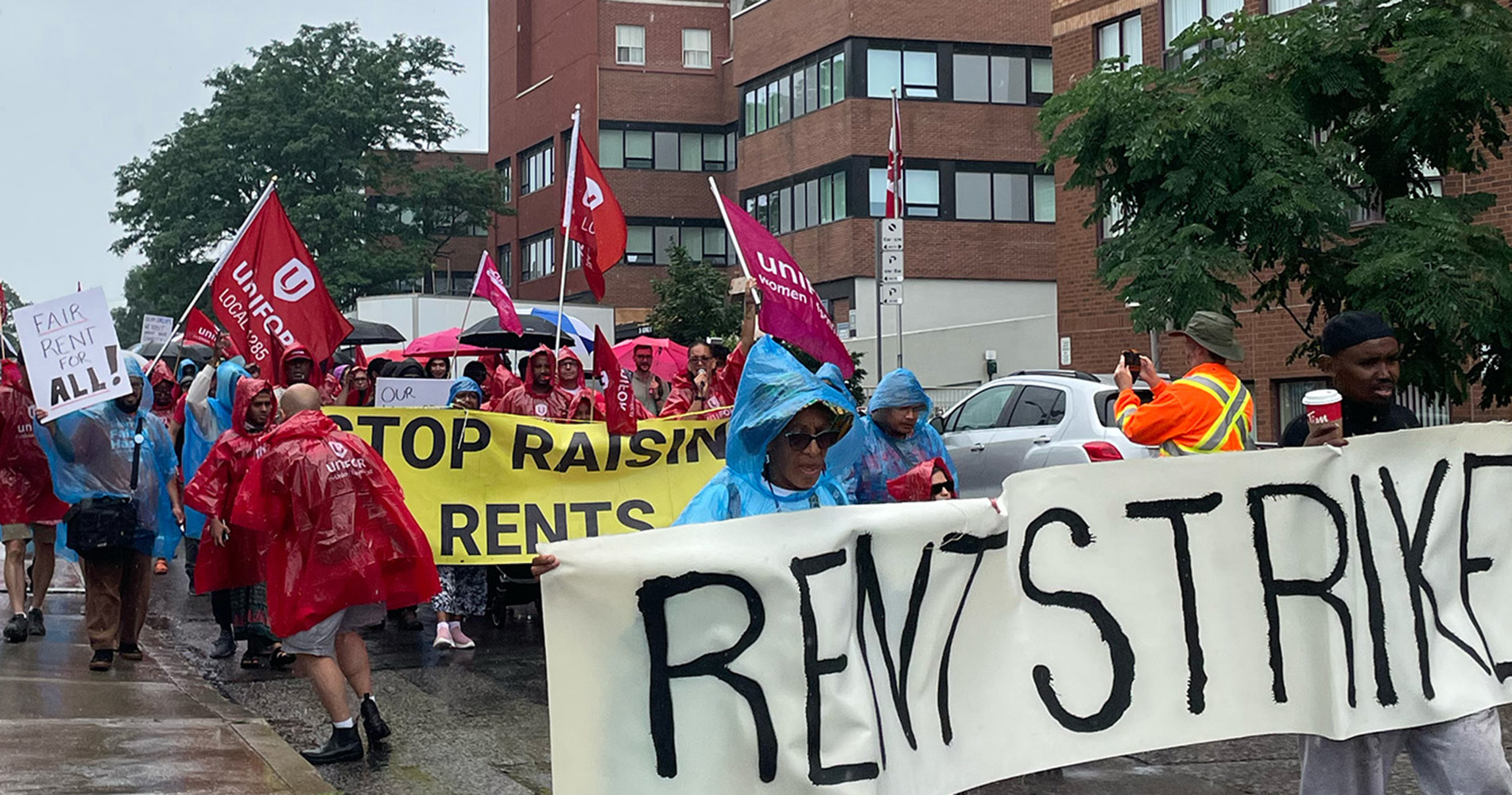
Although every government is involved in housing, and needs to be, provincial governments are currently responsible for tenancy legislation and social housing—which are the two most direct ways to improve affordability for low- and moderate-income households.
Yet the 2026 budget does nothing on that front.
Instead, it provides a GST tax break that will support the real estate industry and people buying newly built homes. In a news conference earlier this week, Premier Ford clarified that, “no matter if you are first-time buyer, second, or 10 time buyer, you’re getting the HST deducted.”
This expensive and grossly mistargeted measure will not improve housing security for Ontarians who desperately need it. Most likely, it will fail in its own stated goal of spurring more construction, as it has in the past.
Ontario is also not raising the funds it needs
Since the Progressive Conservative Party (PC) came to power in 2018, budgets have included some form of tax breaks. The elimination of the carbon tax and the licensing plate sticker fees, frequent gas tax cuts, and weakening of the LCBO, among smaller measures, have all resulted in reduced fiscal capacity. Less money to pay for what Ontarians need.
This year, the notable tax cut is the HST rebate. The government is forgoing $1.4 billion in tax revenues, funds that could go to so many other purposes.
It could go toward cancelling part of the student debt in the province. One in three families carrying student debt in Ontario are living paycheque to paycheque and could use the relief. It could build desperately needed social housing. It could make a dent in the ever-growing school repair backlog. The list goes on.
Ontario needs to increase its fiscal capacity. The first step is to stop these senseless, populist tax cuts.
The times don’t justify austerity
The budget document is full of references to U.S. President Donald Trump’s trade war and to geopolitical conflicts. The uncertainty and fear it evokes subtly justify insufficient investment in key areas. But the truth is that the role of provincial governments hasn’t changed—and neither has their ability to raise funds and invest in core services.
External factors matter, but in this document, they are simply an excuse for neglecting core responsibilities.